
‘A tall, mild, articulate Englishman’ was how Margo Miller, reporter for The Boston Globe, found the 39-year-old Colin Davis when she went to interview him early in February 1967, during rehearsals for his debut with the Boston Symphony Orchestra. He brought with him a programme carefully tailored to his talents and passions: the King Lear Overture of Berlioz (which the orchestra had not played since 1908); the Symphony in Three Movements by Stravinsky, who was very much still alive and ‘Mr. Stravinsky’ in those days; and the Seventh Symphony by Dvořák.
As the most European-sounding of American ensembles, and assiduously cultivating its image as such, the Boston Symphony Orchestra might have been expected to warm to Davis’s congenial authority on the podium, though the patrician manner came later. Miller found the players comparing him (not unfavourably) with Guido Cantelli, Toscanini’s protégé, who had died in a plane crash eleven years earlier.
Davis had arrived in Boston with Shamsi, his second wife, and their first child, two-and-a-half months old. Having by then established himself as the leading advocate for Berlioz among living conductors, he was already talking about the composer in the way we are inclined to speak of our heroes, through the prism of how we see ourselves, or would have others see us. The music of Berlioz ‘doesn’t make anybody feel too comfortable,’ he reflected. ‘He was too uninhibited, too violent. And he had a curious kind of tenderness, not the passion of Wagner, nor the sentimentality of the others. Extreme classical beauty in his music, and every man’s ideal – very virile, and intellectual.’
A return invitation to Boston was not slow in coming, at a time when the Boston Symphony Orchestra was beginning to cast around for a new chief. Erich Leinsdorf walked out, or was shown the door, in November 1967, after complaining in the Globe about the disagreeable duties and pressures attendant on the Music Director of any major American orchestra. He stayed in post for another 18 months, but the Globe’s long-standing music critic Michael Steinberg was already speculating on Davis as ‘the most likely candidate’ to become Leinsdorf’s successor.
When Davis returned, in October 1968, Steinberg seized the day and asked him directly about the supposed ‘impossibilities’ of a Music Director’s job. ‘Yes,’ replied Davis, ‘if one assumes that every concert is meant to be an occasion, that’s quite impossible when there are so many. You just can’t rise to it that often. Now, if you could be put out to grass for a fortnight and then come back with everything you’ve stored…’
In the interim, Davis said, he had moved away from some Stravinsky, including Oedipus Rex, which had feathered his reputation in a 1963 production at Sadler’s Wells. ‘I don’t want to be knocked over the head just now.’ Instead he had brought with him his favourite Brahms symphony, No. 3, the 99th of Haydn – and the First by Richard Rodney Bennett. Wearing his reviewer’s hat a few days later, but not sharpening his Beckmesser’s quill, Steinberg declared that ‘Davis knows just who Haydn was and what his music is all about … I could hardly imagine a more beautiful performance.’ (Bennett and Brahms aroused more modified rapture.)
The pattern was set, in those early concerts, for the programmes Davis would conduct in Boston over the course of the next fifteen years, centring on Austro-German classics, Berlioz, and English composers old and new. It became an open secret that the Boston Symphony Orchestra had offered him the Music Directorship, and he had turned it down, with an eye not to his responsibilities at the time as Chief Conductor of the BBC Symphony Orchestra, but to the job he really coveted, in charge of the Royal Opera. To open the 1969–70 season, the Boston Symphony Orchestra appointed William Steinberg, hardly a choice faute de mieux, but one which brought its own unforeseen challenges when illness forced the 70-year-old Steinberg to withdraw halfway through his first season and pass on his responsibilities to the 24-year-old Assistant Conductor, Michael Tilson Thomas.
Meanwhile Davis was impressing the tough crowd down in New York, both with the New York Philharmonic and at the Metropolitan Opera. Steinberg wrote that the ‘great energy, clarity of shape and vividness of texture,’ as elicited by Davis in Berg’s Wozzeck, were preferable to the work of the conductor he had replaced, Karl Böhm. Rather wistfully, he catalogued Davis’s virtues on his next appearance in Boston, leading Elgar’s First Symphony in February 1970: ‘Responsible, cultured, versatile, lively, technically able, Colin Davis has, all in all, seemed to me the most impressive of the guest conductors who have appeared at the Boston Symphony concerts in recent years.’
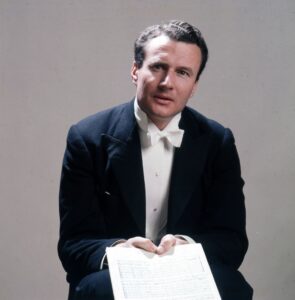
Photo: Decca
A radio broadcast of the concert bears out his enthusiasm, charged as it is with the special commitment that orchestras manifest when getting their teeth into music not over-familiar to them but to which they respond with keen appreciation of its value. The conductor’s own commitment to Boston began increasing, to two and then three programmes per season (all given on four occasions, in the subscription model standard for the time). At a time when the relationship between Tilson Thomas and the Boston Symphony Orchestra had begun to sour, over rehearsal tantrums and perceived ‘flamboyance’, there was a general perplexity as to why no one seemed to think as highly of Davis as they did in Boston. ‘I suppose,’ an anonymous London musician was quoted in the Globe, ‘it’s because we all remember him as a not particularly good clarinettist.’
Steinberg bowed out in 1972, and still Davis could not be persuaded to replace him, occupied as he was by then on the other side of the Atlantic, both at the Royal Opera and at home, with a growing family. Instead, Davis took up the post of Principal Guest Conductor (alongside Tilson Thomas), and Seiji Ozawa accepted the invitation to become Director from the 1973–74 season onwards. Ozawa paid his colleague a warm tribute: ‘A high musician, a deep musician, very good for the orchestra.’
Mutual respect had matured into familiarity on all sides, between Davis, the players and the audience in Boston. The conductor had no compunction about laying down his baton between songs, while accompanying Janet Baker in Berlioz’s Les Nuits d’été in October 1972. After consulting with the leader, Joseph Silverstein, he turned and urged the audience to put away their rustling programmes: ‘Read the poetry when you get home and listen to the music while you are here.’ The noise was distracting for the musicians, and, he added, ‘you don’t know when you will be able to hear these [songs] again.’
A week earlier, Silverstein had played the solo part of Elgar’s Violin Concerto under Davis’s baton (another electric and yet deeply ‘central’ account happily captured on broadcast). In a 1979 interview, Silverstein told the Globe how he admired Davis for arriving early at rehearsals to sit down at the piano and play a Mozart sonata. ‘And that is an effort for him, but he believes, and he is right, that it is important to make music with your hands, to maintain a physical relationship with music.’
In the same programme as the Elgar Concerto, Davis and the Boston Symphony Orchestra first addressed Sibelius together, with the Third Symphony. To judge from the broadcast, Davis may not ever have led another performance of the work so raw and scrappy, but something clicked. Davis found he was tapping into a collective memory of the orchestra’s many Sibelius performances under Serge Koussevitzky, though the orchestra had barely touched the composer in the intervening quarter-century. ‘What we’ve been trying to do,’ he later explained to Malcolm Walker for Gramophone, ‘is play these works with that kind of energy which makes the old dragon burst into life and snort flames.’ They embarked on a systematic exploration, playing No. 4 in October 1973 and No. 1 in February 1974.
Davis and the Boston Symphony Orchestra reached No. 5 in November 1974, and in the audience was Abram Chipman, of High Fidelity magazine. He went backstage after the concert and asked whether Davis would consider recording the symphonies. ‘He rather jovially demurred, stating that so many qualified interpreters of that literature had had a go at it lately, he didn’t think his views would add much to the catalogue at that point.’ Little did Chipman know that, scarcely over a month later, the Philips engineers would arrive to fulfil his fond hopes. All seven symphonies and Tapiola were recorded over four sets of sessions, between January 1975 and November 1976.
Chipman’s review of the first album, pairing Nos. 5 & 7, drew out those qualities which have kept the cycle in the catalogue ever since. ‘Davis’s rhythmic certainty, his generously sweeping but tautly controlled feel for Romantic phrasing, suffuse the music with adrenalin. The Boston Symphony Orchestra is at its inspired best. String attacks are fierce and emphatic, releases blunt and incisive – proper phrase endings are no minor matter in good Sibelius conducting.’
With hindsight, Davis cut against the grain of Sibelius reception. ‘More paint on the brush’ was a phrase he often used in rehearsal to coax deeper tone from string players, consonant with his reputation as a central, even conservative interpreter. Yet he also talked about Sibelius ‘mangling’ his themes, and he heard ‘qualities of unquiet and disruption’ in places that might surprise listeners, such as Chipman, swept up in the momentum of the later Sibelius symphonies under his baton.
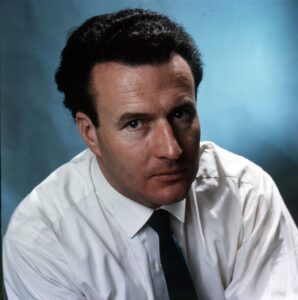
Photo: Decca
While he conducted the songs of Mahler in Boston and elsewhere, Davis felt little affinity with the symphonies. Ever since the two composers met in October 1907, it has suited many listeners to take at face value the dichotomy between their approaches to music and life which emerged from their conversation, at least as reported by the Finnish composer. Having lately completed his own Eighth, Mahler apparently said that ‘The symphony must be like the world. It must be all-embracing.’
Sibelius was prone to hypertrophic exaggeration on his own account from time to time, talking of how the Fifth Symphony had come to him like pieces of a puzzle, handed down from God. Close analysis of the scores motivated Davis’s approach, as it does with any accomplished musician, but it led him to embrace a Romantic-modernist soul-bearing in Sibelius that we more readily associate with Mahler. In 1997, he remarked to Nick Kimberly for Gramophone that Sibelius is ‘the great exponent of the blacker side of life on this planet’.
Five years later, Davis talked to Daniel M. Grimley about a ‘landscape of the soul’ in a conversation for the Cambridge Companion to Sibelius. ‘You have to play some passages without any effort as though they are of no interest at all, and then they sound wonderful.’ We might hear for ourselves this quality of almost offhand simplicity in the opening of the Sixth Symphony, ‘some of the most beautiful sounds that we have,’ as he said to Edward Seckerson for Gramophone in 1991. ‘There it is – the Palestrina counterpoint that has been with us forever, and suddenly it blossoms again, just once more as if for the last time.’
Likewise, most listeners will respond to his sense of ‘the most appalling things’ happening in the finale of the Fourth: ‘The carnage is appalling, and he buries the lot and smooths it over under the A minor chords.’ Much more heterodox is his take on the swan-theme apotheosis and hammered chords to close out the Fifth. ‘There’s an entry in Sibelius’s diary where he goes for a walk in autumn and writes “scent of decay – muted fortissimo”, and that seems to capture the mood at the end of the Fifth Symphony.’
Even more counter-intuitive – to this listener at least – is Davis’s insistence on the end of the Seventh as ‘a very bleak affair … Think what happens to the C major trombone tune: it gets smashed to pieces during the piece. It’s as though all human ideas are doomed to the most appalling failure.’ It is this view that, as he admitted to Grimley, led him to ‘alter the final chords slightly, by not allowing the brass to fade away too far. They drop down so that the strings can be heard, but then come back up again. It sounds more final that way.’
Any writer on Davis – on music – must take a deep breath at such points. On the race riot in The Ice Break (Michael Tippett’s fourth opera, dedicated to the conductor), Davis remarked that the difference between music and what it is depicting seems to collapse. The music becomes ‘something like journalism, and it is terrifying’. All the same, such an intervention to the end of the Seventh says more about Davis than it does about Sibelius, even if, ironically, it projects a Romantic-heroic tone consonant with the approach of Koussevitzky and Mravinsky in doubling the final chord with a high C on the trumpet.
In those early-January 1975 sessions for the Fifth and Seventh symphonies of Sibelius, however, Davis and the Boston Symphony Orchestra also recaptured the joie de vivre which had evidently infused their performance of Mendelssohn’s ‘Italian’ Symphony at the orchestra’s New Year’s Eve gala. Davis had been prevailed upon to lead (in Boston of all places, and scarcely farther than a mile from the site of the Tea Party held 202 years earlier) a local variation on The Last Night of the Proms, which Davis had undertaken back home on several occasions without obvious enthusiasm.
The conductor rehearsed the assembled patrons, sitting at their tables on the stalls floor of Symphony Hall, in singing ‘Hail to the Queen’ from Les Troyens (a feature of his Last Night programmes at the Royal Albert Hall). Then they launched into Rule, Britannia (‘It’s an exhortation,’ he said, ‘not a statement of fact’), Land of Hope and Glory – and The Battle Hymn of the Republic. The Boston Symphony Orchestra played Mendelssohn’s Fourth, and Ives’s Variations on America (the tune also known as God save the King). Davis ignored the calls for Jerusalem but saw in the new year conducting Auld Lang Syne and The Stars and Stripes Forever.
More evidence of Davis with his feet under the table in Boston, dutifully fulfilling the public role that American orchestras and audiences have expected from their conductors, emerges from a report on his appearance at a record-store signing around the corner from Harvard. The previous evening he had led the students of the New England Conservatory in Mozart’s ‘Jupiter’. ‘More passion in the garden,’ he decreed. ‘Anyone who uses less than the whole bow is out.’ Now he found himself being asked to sign LPs ‘To Sally, your most ardent worshipper’. Eventually, according to Richard Buell of the Globe, ‘he pleaded, in tones of despair, “Please may I go now?”’ Two days later he led the Boston Symphony Orchestra in more Sibelius and Mendelssohn, Tapiola alongside the Midsummer Night’s Dream music, which became Side B to the ‘Italian’ on disc.
Davis’s post came to a natural end in 1982. His repertoire in Boston included pieces for which he has hardly been known since, such as Tchaikovsky’s 1812 Overture, alongside the Schubert and Sibelius reprised on record in London and Dresden. The recording of the ‘Great’ C major was notable at the time for being almost the first to include all the marked repeats, which did not endear it to most reviewers.
Talking in 1979 to Richard Dyer, Steinberg’s successor at the Globe, Davis held a down-to-earth perspective on the value of the recordings gathered in this box; as much a part of his make-up as the Schopenhauerian pessimism of his views on Sibelius, in the mould of his perennial enquiry of journalists as to whether they had read Hermann Broch’s The Death of Virgil (there is no evidence that he ever received an affirmative answer). ‘A recording is a dead butterfly. When a butterfly is alive and flying around it is interesting. On the other hand, records are useful for informative purposes … Everyone has to hear everything for the first time. Even if you yourself are exasperated by pinning something down, it is possible that some turn of phrase on the most humble record may catch somebody’s ear, some kid of four, someone like my son, and he may sit up and say, “Let’s hear that again,” and suddenly he’s gone, a sleepwalker for the rest of his life.’
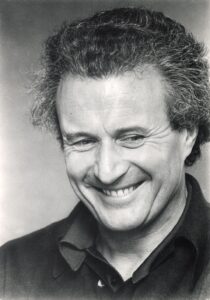
Photo: Mike Evans/Decca
Perhaps Davis had forgotten for a moment that he had himself been ‘someone like my son’, a boy whose life had been turned upside down by records. But good conductors are recreative by instinct as well as profession, and they have other vistas to explore; listening back, especially to themselves, is not in their nature. ‘Even with the very greatest pieces I find that after six or eight performances I am happy to put them away. Not because of any fault in the music, but because one doesn’t want to become grossly familiar with a masterpiece … One must always discover something new and rich.’